Every community is a gathering of faces.
From the founding generation to the kindergarten class of 2024 — every person finds their place here.
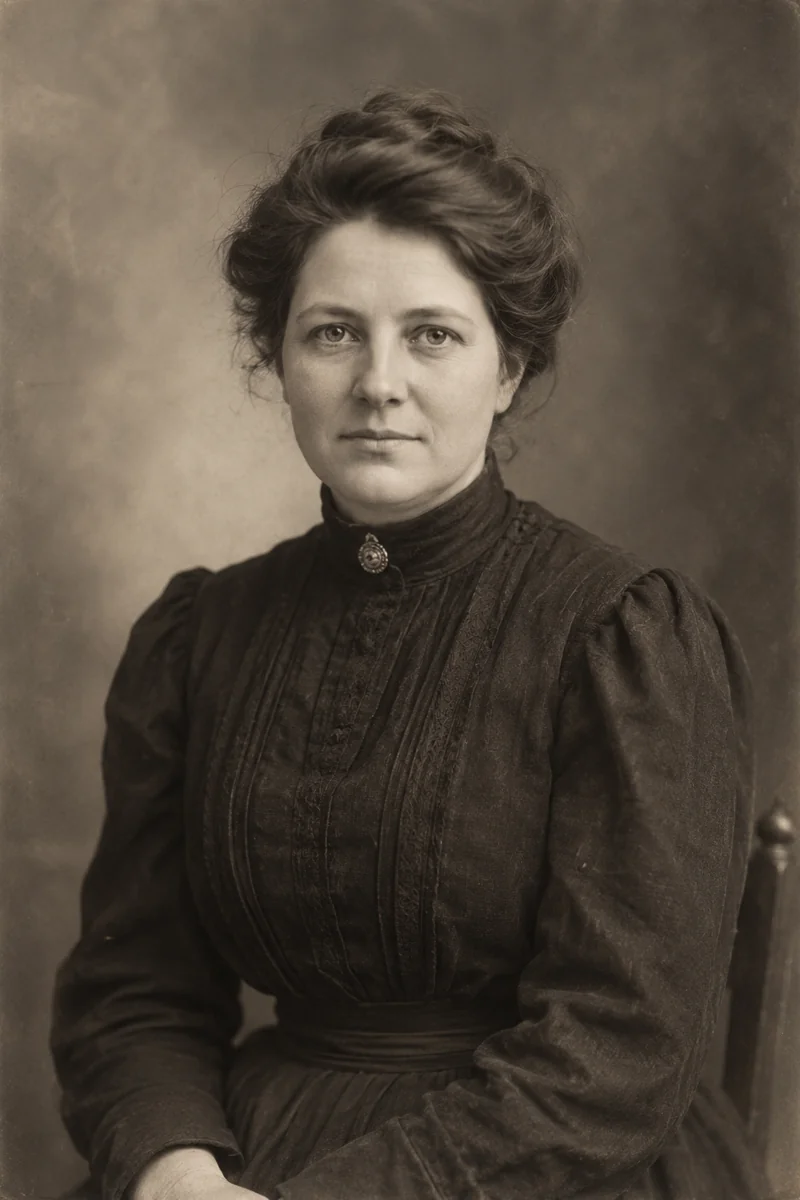 AI illustration
The blacksmith, the pastor, the teacher, the mayor. The widow who survived three wars and the boy born in the summer of the World's Fair. In Archithek every person who lived or worked in your community gets their own entry — with name, life dates, a portrait, a small biography. Even when you don't know everything.
A wide range — and you decide what matters.
- Name, life dates, profession or status
- A small biography — as detailed as you like
- A portrait or a group photo where she appears
- Family relationships (parents, children, marriage) as connections
- Memberships in associations, councils, families
- Embargoes when you want to protect someone
AI illustration
A fictional example
Anna, born sometime around 1890
Maybe you only know her first name and the decade she was born. That is enough. Archithek lets you say "approximately". A "ca." before the year, and Anna gets her place among all the others — sorted chronologically, linked to her farm, to her husband, to her grandson who still lives here today.
Three reasons why people are a joy in Archithek.
"Approximately" is enough
Not every birth date is known. Archithek accepts "around 1756" or "Bronze Age" too and still sorts correctly.
Stay private if you wish
Someone doesn't want to be named — or only their name, not their address? Configurable per person.
Visible in connection
A person is not a record. They are a node in a web — of families, places, events, photos.
„A name becomes meaningful when its traces come together.“
— Guiding principle of the People collection
These collections belong together
People in your community: a conversation?
Show us what you have. We'll show you how it becomes a living collection.