What happened — and when.
Festivals, fires, floods, inaugurations, jubilees. The red thread through the centuries.
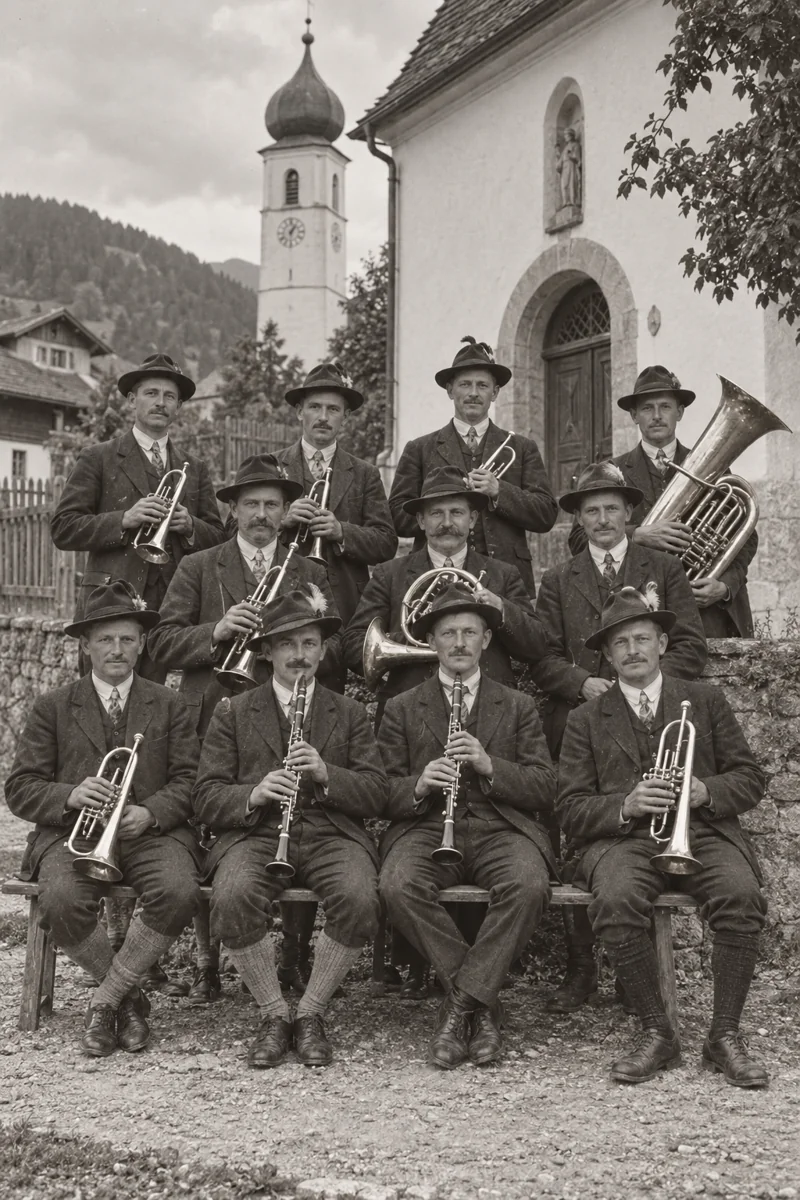 AI illustration
Every community has its dates. The village fire. The flood. The inauguration of the church. The first May festival, the jubilee year, the merger. The chronicle gathers all these moments and links them with the people who were there and the places where it happened. A precise date is nice — but "in the summer of 1890" or "sometime in the fifties" is just as welcome.
A wide range — and you decide what matters.
- Village festivals, jubilees, inaugurations
- Disasters: fires, floods, storm damage
- Construction projects with start and end (church build 1887–1892)
- Inaugurations, farewells
- Founding and jubilee dates of associations
- Or simply "the summer the well ran dry"
 AI illustration
A fictional example
Village fire, August 17, 1890
Fourteen buildings stood in flames. The fire brigade was four years old and fought until dawn. In Archithek this becomes a single entry — with the date, a short account, the names of those involved, the destroyed houses on the map, the fire report as PDF, a collection of historic photos. Whoever searches "village fire" today finds it all. In one place.
Three reasons why chronicle are a joy in Archithek.
Point or period
An inauguration is one day. A construction project is five years. Both forms work just as easily.
"Sometime" is also fine
If only the decade is known, that's enough. An "approximately" tick keeps it transparent.
People & places connected
An event automatically pulls everyone involved together — the people, the buildings, the documents.
„A chronicle gains value when you can follow the sources of its stories.“
— Guiding principle of the Chronicle collection
These collections belong together
Chronicle in your community: a conversation?
Show us what you have. We'll show you how it becomes a living collection.